The Haut-Doubs is also something to discover at the table. Its wines come from the vineyards of Franche-Comté, its cheeses from village dairies, its cured meats from the smoke of the great farmhouse chimneys. This page introduces these specialities, their history and the best pairings. When you arrive, a fir syrup from Maison Rième is waiting for you in the apartment, as our gift. The cheeses and cured meats are just a short walk away, in the village shops.
Wines and drinks of the region From the Franche-Comté vineyards to Morteau
Jura wines
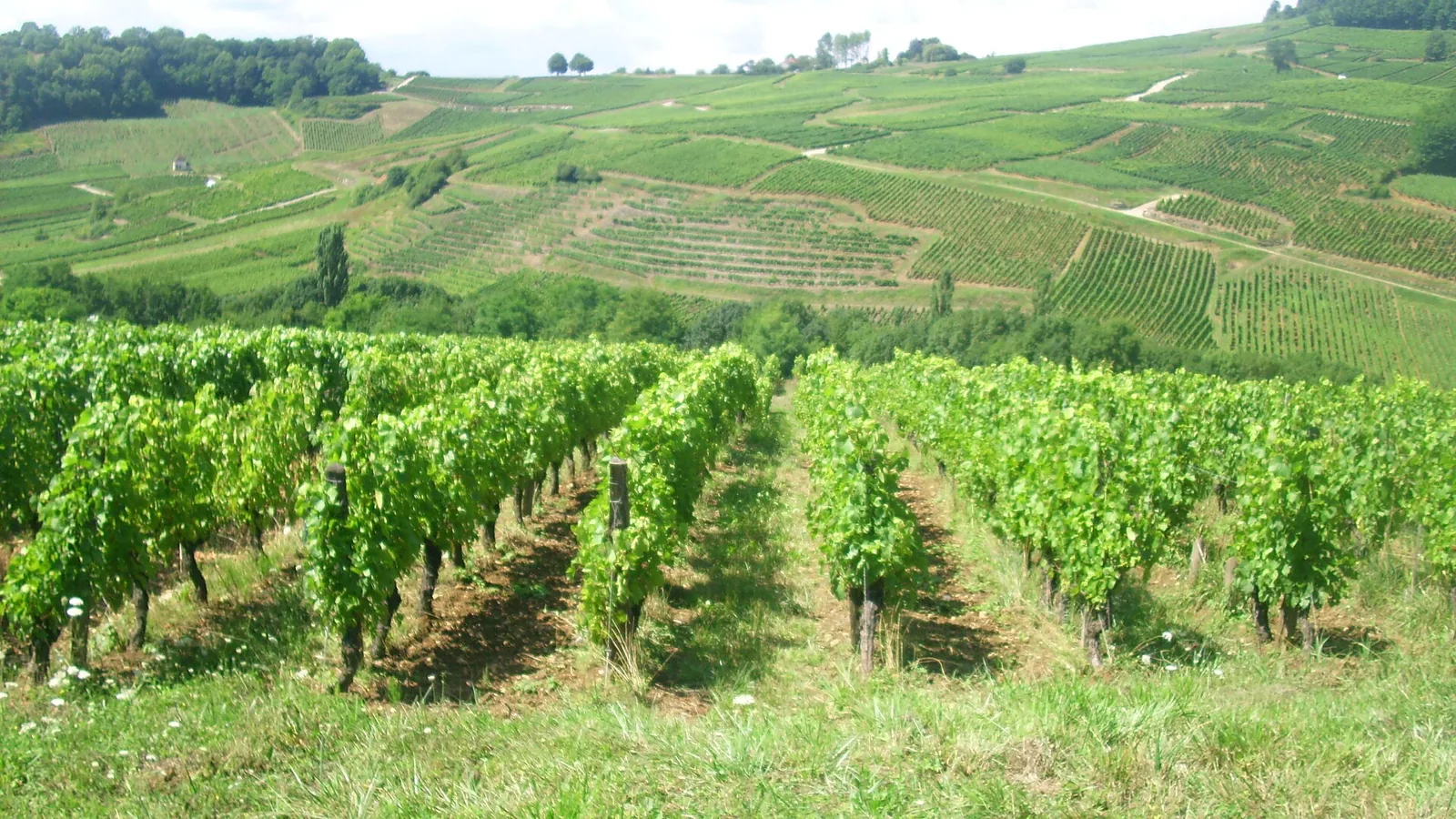
In the west of Franche-Comté, on the hillsides that border the plain, lies a small wine region with highly distinctive wines, grouped under the Jura appellation. Five grape varieties are grown there: Chardonnay and Pinot Noir, well known elsewhere, and three that are emblematic of the region: Savagnin, Poulsard and Trousseau.
Seven wines tell the story of this vineyard well, from aperitif to dessert: Crémant to begin, Macvin to finish. They come from winegrowers and wine cooperatives, and go naturally with the local cooking.
Topped up or under a veil: the key to the region's white wines
In the barrel, wine slowly evaporates. The winemaker then has two choices. If the barrel is regularly topped up, the wine stays protected from the air: this is called ouillage, and it gives fresh, floral, mineral whites. If the level is left to drop, a thin veil of yeast forms on the surface, protects the wine and slowly transforms it: it develops notes of walnut, spice and dried fruit, the famous “goût de jaune”. This is the secret of vin jaune, which spends more than six years under its veil, and of the wines known as “typé”.
Crémant du Jura
Sparkling · white
- Its secret
- The bubbles of the Franche-Comté vineyards, made as in Champagne by a second fermentation in the bottle: the traditional method. The appellation has existed since 1995.
- On the palate
- Fine bubbles, a fresh and lively palate, notes of white fruit and citrus.
- At the table
- As an aperitif, with cubes of young Comté or Comté gougères.
Serve at 6–8 °C
Chardonnay
Dry white · topped up (ouillé)
- Its secret
- The world's most famous white grape takes on a particular accent here, on marl and limestone soils. Ouillé, that is, protected from the air throughout its ageing, it keeps all its freshness.
- On the palate
- Dry, round and mineral, with notes of white flowers.
- At the table
- Trout, Comté fondue, Comté aged a few months.
Serve at 10–12 °C
Savagnin
Dry white · typé, aged under a veil
- Its secret
- The region's great white grape, the one used for vin jaune. In its “typé” style, it ages under a veil, without topping up, and it is this veil of yeast that gives it its very particular taste.
- On the palate
- Dry and broad, with notes of fresh walnut, gentle spice and dried fruit. A long finish that surprises with the first sip.
- At the table
- The natural partner of aged Comté, baked Mont d'Or, fondue and creamy dishes such as chicken with vin jaune.
Serve at 12–14 °C
- Its secret
- A rosé from the region in a classic style, chosen for its lightness and fruit, to be drunk young.
- On the palate
- Dry, light and fruity, with notes of small red berries.
- At the table
- Cured meats, mixed salads, Montbéliard sausage.
Serve at 8–10 °C
Poulsard
Light red · also called Ploussard
- Its secret
- The red that people mistake for a rosé. Its grapes have thin skins with few pigments, which gives the wine a very pale, almost translucent colour, often compared to coral. The village of Pupillin, which has made it its speciality, calls itself the capital of Ploussard.
- On the palate
- Light, with very soft tannins and notes of small red berries.
- At the table
- Morteau sausage, cured meats, poultry. Serve it slightly chilled.
Serve at 12–14 °C
- Its secret
- Deeper in colour and more structured than Poulsard, it remains an elegant red. The village of Montigny-lès-Arsures, near Arbois, calls itself its capital.
- On the palate
- Ripe red and black fruit, a hint of pepper, a round palate.
- At the table
- Morteau sausage with lentils, grilled meat, game.
Serve at 14–16 °C
Macvin du Jura
White fortified wine (vin de liqueur) · 16 to 22% vol.
- Its secret
- The fermentation of the grape juice is stopped, just as it begins, by adding grape marc brandy from the same estate; the blend is then aged for at least a year in oak barrels. Macvin thus keeps the sugar and fruit of the grape. An old tradition that became an appellation in 1991.
- On the palate
- Sweet and lively at the same time: grape, dried fruit, honey, with the brandy well integrated.
- At the table
- Well chilled, as an aperitif or with dessert: melon, foie gras, walnut desserts.
Serve at 8–10 °C
L'abus d'alcool est dangereux pour la santé, à consommer avec modération. (Alcohol abuse is dangerous for your health; please drink in moderation.)
A few producers we love
To discover these wines, a few winegrowers and wine cooperatives we particularly like:
- Domaine Jacques Tissot Arbois
- Henri Clavelin & Fils
- Fruitière vinicole de Pupillin
- Fruitière vinicole de Voiteur
- Maison Rième Morteau · soft drinks
Franche-Comté pairings
The raclette and fondue sets are in the kitchen, the cheeses and cured meats in the village (we introduce them further down). Here, for each dish, is the Jura wine that goes well with it.
And for the whole family: an ice-cold Mortuacienne.
L'abus d'alcool est dangereux pour la santé, à consommer avec modération. (Alcohol abuse is dangerous for your health; please drink in moderation.)
Maison Rième, Morteau
Since 1921, Maison Rième has been making lemonades and syrups in Morteau, in the heart of the Haut-Doubs. Founded by Marcel Rième and his brother-in-law Adrien Bouhéret, it has always remained in the family, now in its fourth generation.
La Mortuacienne
Craft lemonade
- Its secret
- Its name pays tribute to the Mortuaciens, the people of Morteau. Created by Marcel Rième, it became the emblem of the house, and its recipe is still a closely guarded secret.
- On the palate
- Sparkling and thirst-quenching.
- At the table
- For the whole family, after a hike, or with a Cancoillotte.
Fir syrup
Our gift on arrival
- Its secret
- The fir is the tree of the Haut-Doubs: it covers the forests around the apartment and scents the smoke of the tuyés. Maison Rième has turned it into a syrup, which we offer you for your stay.
- How to enjoy it
- Diluted with cold still or sparkling water.
To discover in the village Cheeses and cured meats of the Haut-Doubs
You will find them a short walk away, from the village's producers and shops (see Where to buy).
Cheeses of the Haut-Doubs
Here, cheese is a matter of raw milk, meadows and cooperatives. Farmers deliver their milk to the village fruitière, which turns it into cheese on site. Four cheeses sum up this know-how.
Did you know?
In Franche-Comté, a fruitière is a cooperative. Dairy farmers pool their milk there to make Comté; winegrowers do the same with their grapes in the fruitières vinicoles. Same word, same idea: producing together, in the village.
Comté
AOP · cooked pressed cheese
- Its secret
- It takes about 400 litres of raw milk from Montbéliarde or Simmental cows to make a 40 kg wheel. Ripening lasts at least four months, often much longer (eight months on average, sometimes two years): every wheel has its own character.
- On the palate
- Young, it is mild and milky, with notes of butter and hazelnut. With age it becomes fruitier and more powerful, and develops small crystals.
- At the table
- Chardonnay with a young Comté, Savagnin with an aged one: the region's most famous pairing.
Mont d'Or
AOP · soft cheese, bound in spruce
- Its secret
- The winter cheese. It is only made from 15 August to 15 March, and only sold from 10 September to 10 May. As soon as it is made, it is bound with a strip of spruce bark, then ripened in its spruce-wood box, which gives it its woody aroma.
- On the palate
- Creamy enough to eat with a spoon, with notes of undergrowth and resin.
- At the table
- Baked in the oven as a “boîte chaude”, with a dash of white wine and potatoes. And a glass of Savagnin.
Morbier
AOP · uncooked pressed cheese
- Its secret
- You can recognise it by its black line. According to tradition, farmers protected the curd from a first milking with a thin layer of soot, until they could complete the cheese with milk from the next milking. Today the line is made of tasteless vegetable charcoal, and it has remained as a signature.
- On the palate
- A supple, melting texture with a mild, milky taste that grows stronger with age.
- At the table
- Chardonnay or Poulsard. Melted as raclette, it works wonders.
Cancoillotte
IGP · melted cheese
- Its secret
- The most surprising of all. The milk is skimmed to make a small cheese, the metton, which is left to ripen before being melted. The result is a runny cheese cream, awarded IGP status in 2022.
- On the palate
- Plain, with garlic or with wine, cold or warm, on bread or hot potatoes.
- At the table
- A fresh Chardonnay, or a Mortuacienne.
Cured meats smoked in the tuyé
The tuyé
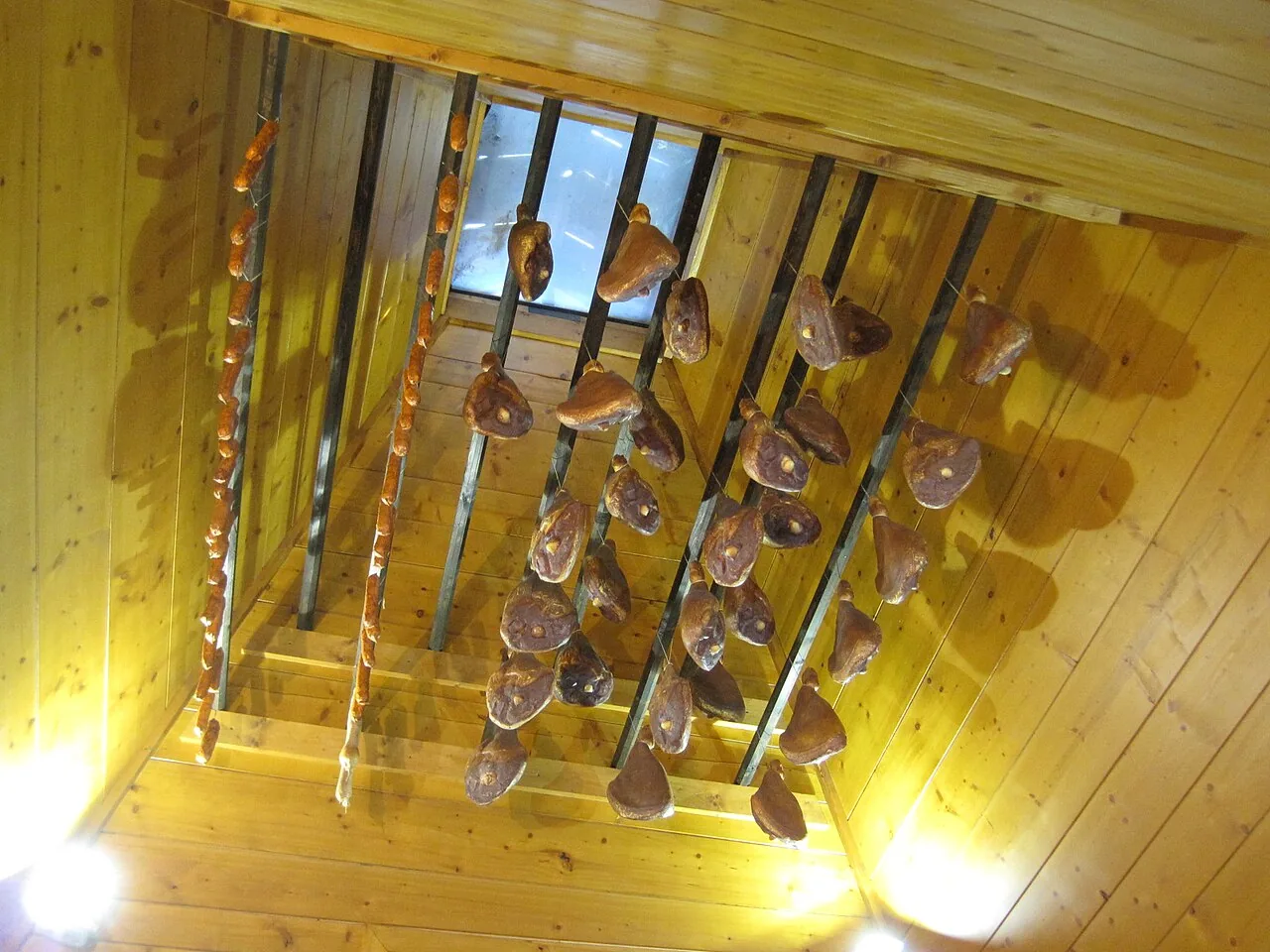
In the old farmhouses of the Haut-Doubs, a huge pyramid-shaped wooden chimney dominates the house: this is the tuyé. Hams and sausages are hung there above a slow fire of softwood and sawdust, which dries them and gives them their flavour. This tradition is listed in France's inventory of intangible cultural heritage.
Morteau sausage
IGP · smoked over softwood
- Its secret
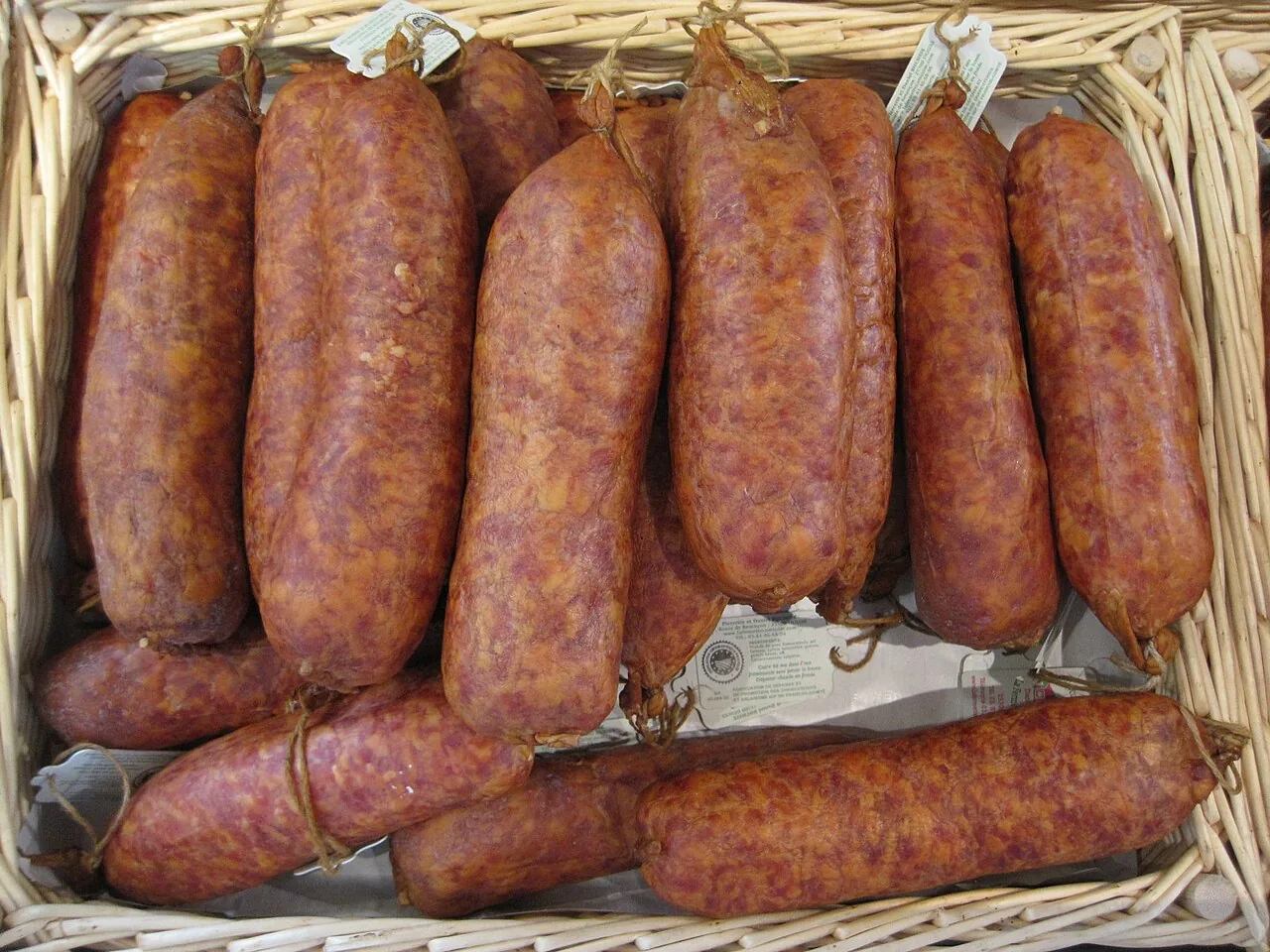
- The queen of the region's cured meats, slowly smoked over softwood and sawdust. You can recognise it by its little wooden peg. And one detail links the whole terroir: the pigs are partly fed on whey from the local cheese dairies.
- On the palate
- Firm, smoky, very aromatic. It is cooked gently in simmering water, without pricking it, so that it keeps its juices.
- At the table
- Lentils, potatoes, Cancoillotte… and a Poulsard or a Trousseau.
Montbéliard sausage
IGP · smoked, seasoned with cumin
- Its secret
- Its cousin from the Montbéliard area: slightly curved, seasoned with cumin and pepper, and also smoked over softwood.
- On the palate
- Finer than the Morteau, juicy, with the warm touch of cumin.
- At the table
- In a potato salad or with hot Cancoillotte, and a rosé or a Poulsard.
Smoked ham and brési
Smoked and dried
- Their secret
- Haut-Doubs ham goes through salt, the smoke of the tuyé, then long months of drying. Brési is a speciality of salted, dried and smoked beef, cut into very thin slices.
- On the palate
- The ham is tender and deeply smoky. Brési is lean, concentrated and dark red.
- At the table
- On a plate, with a Poulsard or a Trousseau. Brési as an aperitif, with a Crémant.
Where to buy cheeses and cured meats
Addresses, opening hours and visits are on our Shops and Activities pages. In short:
- Cheeses: the Fruitière des Lacs in the village, where you can watch Comté and Morbier being made every morning; the Fromagerie du Mont d'Or in Métabief; the Comté ripening cellars at Fort Saint-Antoine.
- Cured meats: the Boucherie Paillard Frères in the village, which also lets you discover its tuyé.
Photos: Château-Chalon vineyards by Mpmpmp (CC BY-SA 3.0); hams in the tuyé and Morteau sausages by Arnaud 25 (CC BY-SA 4.0, CC BY-SA 3.0), via Wikimedia Commons.